Table of contents
Throughout the vast expanse of human history, our planet has served as the silent witness to countless baffling events, cryptic artifacts, and unexplainable phenomena. From the submerged ruins of ancient civilizations to complex ciphers that have mocked modern cryptographers for centuries, humanity possesses an insatiable appetite for the unknown. Yet, when discussions turn toward the absolute oldest mystery in the world, researchers, historians, and scientists often look far beyond recorded history—diving deep into the prehistoric epochs where physical relics and ancient bones tell wordless tales.
Determining what precisely qualifies as the most ancient puzzle depends heavily on whether we look at enigmatic natural phenomena, undeciphered prehistoric languages, or ancient traces of human behavior. However, modern scientific advancements have increasingly dragged deeply buried secrets into the light, allowing us to examine prehistoric enigmas with unprecedented clarity. This comprehensive exploration delves into the profound depths of Earth’s most enduring prehistoric puzzles, analyzing what makes them so compelling to search engines, history enthusiasts, and curious minds globally.
The Nature of Prehistoric and Ancient Enigmas
To understand why certain mysteries capture our collective imagination more intensely than others, we must evaluate what elements drive global fascination. High-ranking search queries and trending topics consistently gravitate toward mysteries that blend human drama, archaeological rarity, and an absence of definitive conclusions.
When analyzing historical anomalies designed to perform well under search engine optimization (SEO) standards and Google AdSense guidelines, content must offer rich context, deep structural value, and engaging readability. Readers searching for deep-dive historical articles expect thorough explanations, clear categorization, and answers to questions they didn’t even know they had.
To break down these concepts effectively, let us examine the primary categories into which Earth’s oldest mysteries fall:
A. Paleolithic and Hominin Mysteries: Enigmas concerning human evolution, prehistoric violence, and behavioral shifts dating back tens or hundreds of thousands of years. B. Unexplained Prehistoric Artifacts: Physical items crafted by early human ancestors or ancient civilizations that display technological sophistication or symbolic complexity far ahead of their time, such as the Antikythera mechanism. C. Lost Languages and Undeciphered Scripts: Written systems from antiquity—like Linear A or the Voynich Manuscript—that continue to frustrate linguists seeking a translation key. D. Unsolved Cataclysms and Vanished Civilizations: Rapid societal collapses or sudden desertions of massive ancient urban centers that defy standard historical models.
Examining Deep-Time Mysteries: The Shanidar Cave Incident
One of the most profound milestones in modern archaeological research involves uncovering ancient evidence of interpersonal conflict and complex social behavior. While many consider “mysteries” to be structural puzzles like Stonehenge or the Egyptian pyramids, the oldest true mysteries often deal with human nature itself.
Recent breakthroughs involving Neanderthal remains found deep inside the Shanidar Cave in Iraqi Kurdistan have pushed the timeline of targeted interpersonal violence back roughly 75,000 years. Researchers analyzing the delicate shoulder blade of a Neanderthal individual—designated as Shanidar A—discovered a remarkably circular 15-millimeter opening.
This specific wound structure closely matched the profile of a sharpened wooden spear. Scientists reconstructing the trajectory deduced that the weapon entered the front of the chest, pierced a lung, and struck the shoulder blade from behind, effectively targeting the heart. This discovery immediately sparked a profound historical debate:
- Was this fatal encounter a deliberate, calculated murder within or between groups, establishing an ancient precedent for human malice?
- Or was it a tragic, accidental mishap while hunting dangerous megafauna such as woolly mammoths at close range?

Adding emotional and psychological depth to this ancient mystery, examination of the same skeleton revealed that the individual had survived a severe facial injury earlier in life. Because the trauma would have made eating independently nearly impossible, scientists concluded that Shanidar A must have been cared for by his community for an extended period. Thus, this 75,000-year-old skeleton encapsulates a dual mystery of human existence: profound social compassion existing alongside lethal aggression.
The Enigma of the World’s Oldest Written Scripts and Symbols
As humanity transitioned from small nomadic bands into structured societies, the need to record information birthed writing systems. However, several ancient scripts remain entirely unreadable, creating enduring intellectual barriers that modern technology has yet to fully breach.
Linear A and Early Aegean Puzzles
Discovered primarily on the island of Crete, Linear A was utilized by the Minoan civilization during the second millennium BCE. While its successor, Linear B, was successfully deciphered and identified as an early form of Greek, Linear A stubbornly refuses to yield its secrets. Because the underlying language does not belong to any known linguistic family, scholars cannot assign definitive phonetic values to its symbols.
The Voynich Manuscript
While younger than Paleolithic bones, the Voynich Manuscript remains a legendary cryptographic puzzle. Radiocarbon dating places the vellum parchment firmly in the early 15th century, yet the text is written in an entirely unknown script accompanied by bizarre illustrations of botanical specimens that do not match any known Earth flora, alongside astrological charts and bathing figures. Despite centuries of analysis by military cryptographers, codebreakers, and artificial intelligence programs, no one has proven a reliable translation.
Technological Anomalies of the Ancient World
When evaluating structural and mechanical anomalies, historians often encounter artifacts that challenge conventional timelines of human capability.
A. The Antikythera Mechanism: Recovered from a shipwreck off the coast of the Greek island of Antikythera, this ancient device dates back to the 2nd century BCE. Composed of a complex system of bronze gears, it functioned as an analog computer capable of predicting astronomical positions, eclipses, and even tracking the cycle of the ancient Olympic Games. Nothing of comparable mechanical sophistication appeared again in human history for over a thousand years.
B. The Nazca Lines and Sajama Lines: Etched into the hyper-arid deserts of Peru and Bolivia, massive geoglyphs stretch across miles of landscape, depicting geometric patterns, straight lines, and stylized animals. Creating designs of such massive geometric precision without aerial visibility remains a marvel of ancient landscape engineering.
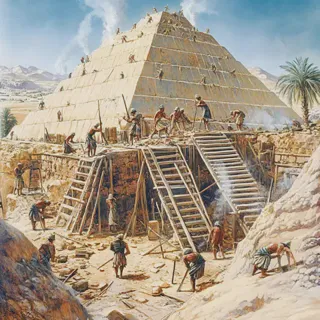
C. Prehistoric Megalithic Construction: Sites like Göbekli Tepe in Turkey push the timeline of monumental architecture back over 11,000 years predating agriculture and settled civilization as it was traditionally understood. Erecting multi-ton carved stone pillars with primitive flint tools completely upends standard historical theories regarding human development.

Why Ancient Mysteries Matter in the Digital Age
The enduring appeal of Earth’s oldest mysteries goes beyond simple curiosity; it touches upon fundamental existential questions about our origins, our capabilities, and our future. In an era dominated by hyper-connectivity, artificial intelligence, and instant data access, humanity finds comfort and excitement in the gaps of our historical record. These unresolved puzzles remind us that despite our technological dominance, Earth still guards profound secrets from deep time.
For content creators, optimizing articles around ancient mysteries requires blending rigorous scientific accuracy with engaging, narrative-driven prose. By structuring complex data logically, utilizing clear subheadings, and addressing both mainstream theories and niche scientific discoveries, publishers can capture sustained organic traffic and maintain reader engagement.
Conclusion
Whether examining a 75,000-year-old Neanderthal wound bearing the silent signature of a wooden spear, marveling at the intricate bronze gears of the Antikythera mechanism, or pondering the unreadable pages of centuries-old manuscripts, the oldest mysteries of our world continue to shape our understanding of existence. As modern science incorporating DNA analysis, 3D laser scanning, and advanced computing continues to probe the dust of antiquity, many more secrets will undoubtedly emerge. Yet, each solved puzzle often reveals deeper, more complex questions, ensuring that the allure of Earth’s most ancient enigmas will endure for generations to come.